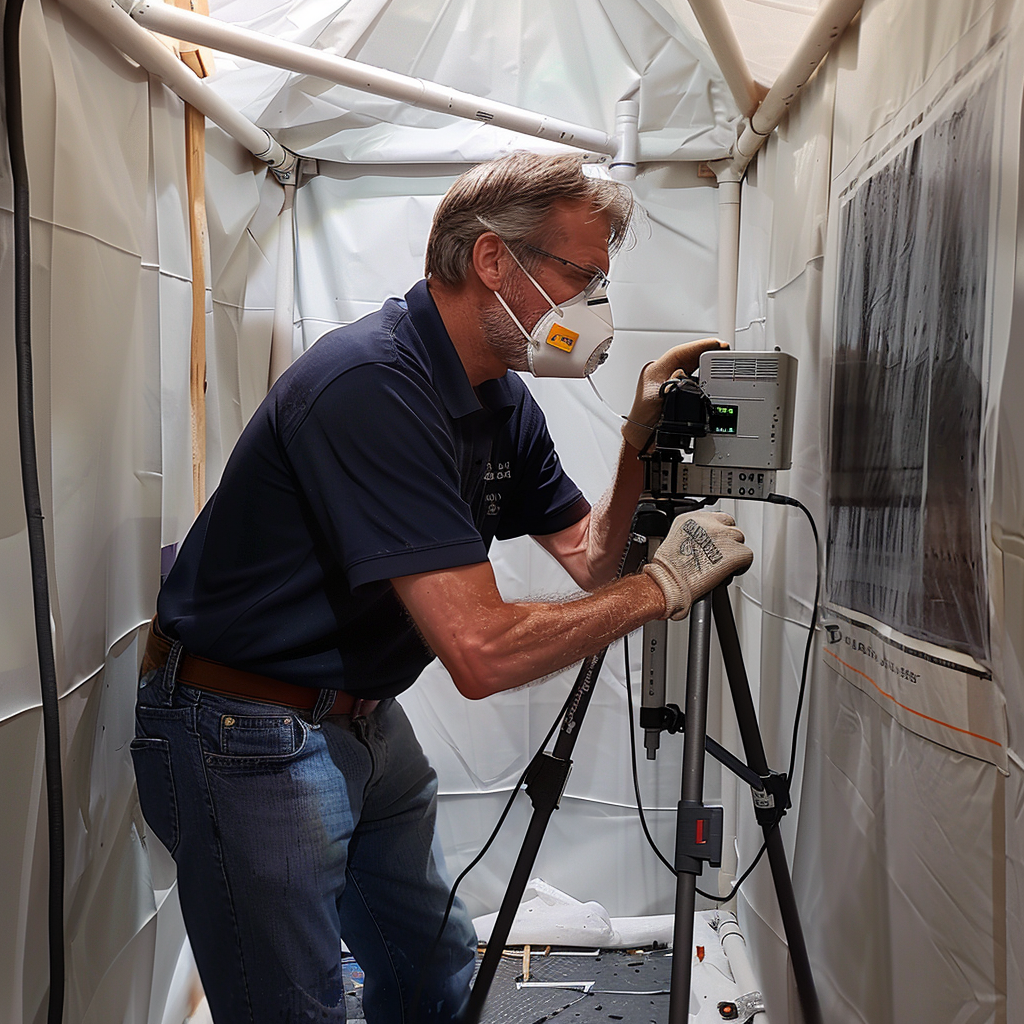
In mold inspections, what’s hidden in the air often tells a more important story than what’s visible on surfaces. Air testing is a key part of the process, helping detect airborne mold spores and evaluate the overall air quality inside a property.
What Is Air Testing?
Air testing, sometimes called air sampling, involves collecting indoor air samples to identify the types and concentration of mold spores present. These results are typically compared with outdoor samples to determine whether indoor mold levels are unusually high.
How Air Testing Is Performed
During an inspection, a technician uses specialized equipment—such as a calibrated air pump paired with a collection device like a spore trap—to capture airborne particles. Samples are commonly taken from:
- Main living spaces and bedrooms
- HVAC systems and air vents
- Areas suspected of having moisture problems
- An outdoor reference point for accurate comparison
Once collected, the samples are sent to a lab where experts analyze them under a microscope to determine spore counts and identify mold types.
Why Air Testing Is Important
Air testing reveals information that a visual inspection alone may miss. It can:
- Uncover hidden mold growth behind walls or ceilings
- Detect elevated spore levels even when no mold is visible
- Evaluate indoor air quality and potential health concerns
- Provide documentation for real estate transactions or insurance purposes
This type of testing is especially valuable when there are signs like persistent musty odors, allergy symptoms, or respiratory irritation without a clear cause.